
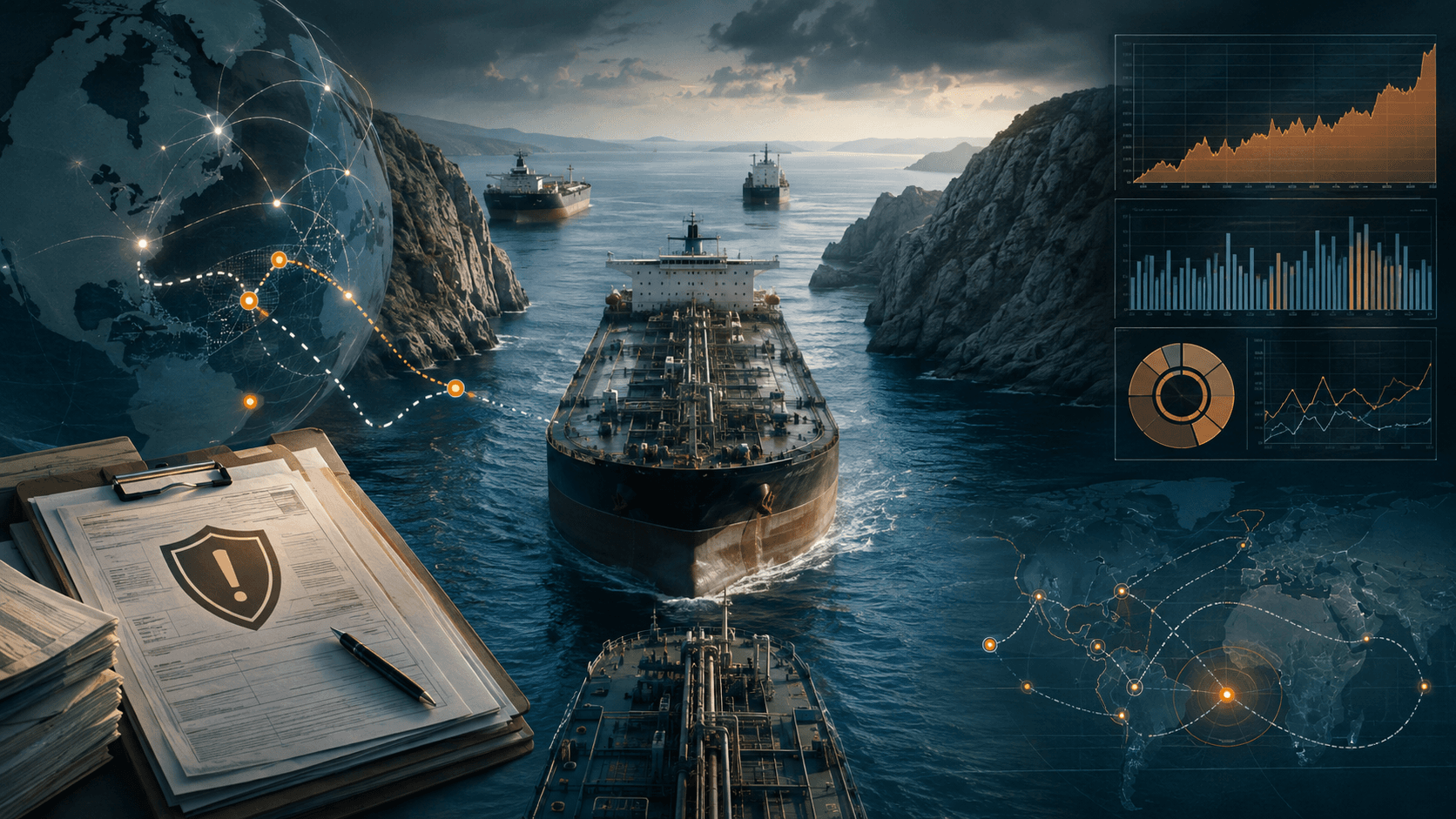
What TradeGen is highlighting
This Marketing News brief adapts TradeGen's analysis by Feitty Eucharisti. The central point is that supply-chain shocks often appear first as route risk and later as price pressure across production and logistics.
Why it matters
The source focuses on the Strait of Hormuz as a chokepoint where disruption can affect oil, freight, insurance, and broader cost expectations.
Businesses may not feel the effect immediately, but contract pricing, fuel surcharges, shipment timing, and inventory policies can change within weeks.
The practical lesson is to connect geopolitical monitoring with procurement, logistics, and landed-cost planning.
What businesses should do next
- Stress-test freight and fuel assumptions.
- Review inventory buffers.
- Monitor insurance and route surcharges.
Editorial note
This article is an original Marketing News adaptation based on TradeGen's source article, "Bottleneck in Hormuz - and the Bill Arrives By June", published on 07 April 2026. The source is attributed for facts and framing; this version is rewritten for GetRegNex readers.
Related articles
Related articles
Continue with articles selected from similar topics and tags.

Indonesia Export Market Data Q1 2026: Commodities, Destination Markets, and How Indonesian Goods Compete
Read Indonesia's Q1 2026 export signals: trade value, priority markets, notable commodities, and what the data means for exporters.
Read article
ASEAN Transshipment Scrutiny: Trade Reallocation Is Not the Same as Fraud
The TradeGen article separates trade reallocation, rerouting, and illegal transshipment, showing why origin evidence matters more than headline trade-flow changes.
Read article
Indonesia's Commodity Advantage Needs a Trading Ecosystem, Not Only Export Controls
TradeGen's white-paper style analysis argues that Indonesia can capture more value from coal and palm oil by strengthening trade finance, logistics, data, standards, and market infrastructure.
Read article